The Living Fungi LibraryFungi LibraryMushroom Forage Map
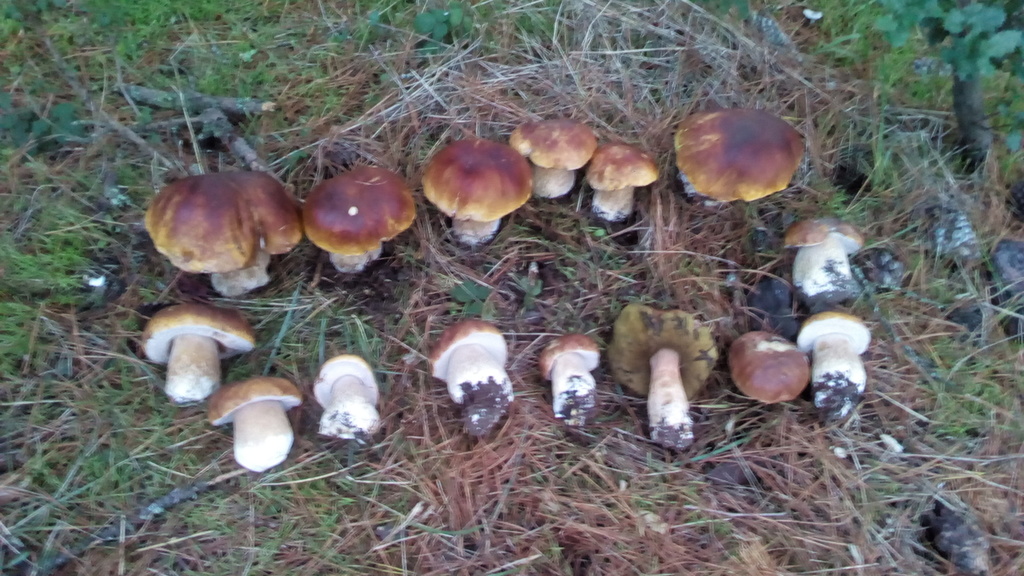
Brown-capped king bolete with a thick pale stem
Choice edibleintermediate

King Bolete

Boletus edulis / Porcini, Cep

A stout, brown-capped bolete with pale pores and fine white netting on the upper stem.

Photo: Alan Rockefeller, CC BY
Compiled by Mushroom Forage Map field deskExpert review pendingContent checked
Identification warning

Skip boletes with red or orange pores or strong blue bruising until an expert has ruled out toxic species.

Season
Summer through fall after sustained moisture
Habitat
Conifer and mixed forest, often at montane elevations
Underside
White pores when young, aging yellow to olive
Spore evidence
Olive brown

Where it grows

Tracked records and known growing zone

Explore on the field map
Loading map…
Squares: where people recorded it, brighter where more people did
Verified records
19,070
People who recorded it
8,367
Most records (northern hemisphere)
Aug–Oct
Records span
1970–2026

Research-grade iNaturalist records, snapshot Aug 27, 2026. The growing zone combines areas where different people have repeatedly verified it. Records show where people looked and found it, not current abundance or permission to gather.

Observation season

When field records occur

Choose a hemisphere · All recorded years; not a current forecast.

Choose the hemisphere you want to study. Country detection is approximate and some countries span the equator.

Compare before concluding

Lookalikes to rule out

Bitter Bolete

harmless

Tylopilus felleus develops pink-flushed pores and coarse dark netting; its intense bitterness ruins a meal.

Red-pored boletes

caution

Red or orange pores and strong blue staining are a stop sign for beginners, not a feature to dismiss.

Identification

King boletes have pores rather than gills. Those pores are white when young, then yellow and olive, never red. The upper stem usually carries fine white netting, and the thick white flesh does not change color when cut. A mature cap often resembles a brown hamburger bun.

North American porcini form a species complex. In the Rockies, red-capped specimens may be Boletus rubriceps, a species formally named only in 2014.

Uses and ecology

Porcini are among the world's most valued culinary mushrooms. Drying concentrates their aroma, while fresh specimens hold up well to sauteing and roasting. They are mycorrhizal partners of trees, so commercial cultivation remains impractical and the market relies on wild harvest.

Memorable fact

The Italian name "porcini" means little pigs or piglets.

Sources

Back to the fungi library